
The State of Girls in Massachusetts Youth Serving Systems 2026
While girls make up a smaller proportion of those in the system than boys, there are emerging trends showing increased system involvement and the need for more focused, gender responsive support services to address girl’s needs in the Commonwealth. These trends in legal system involvement also intersect with longstanding racial disparities, as youth of color overall remain disproportionately impacted across systems.



Outcomes
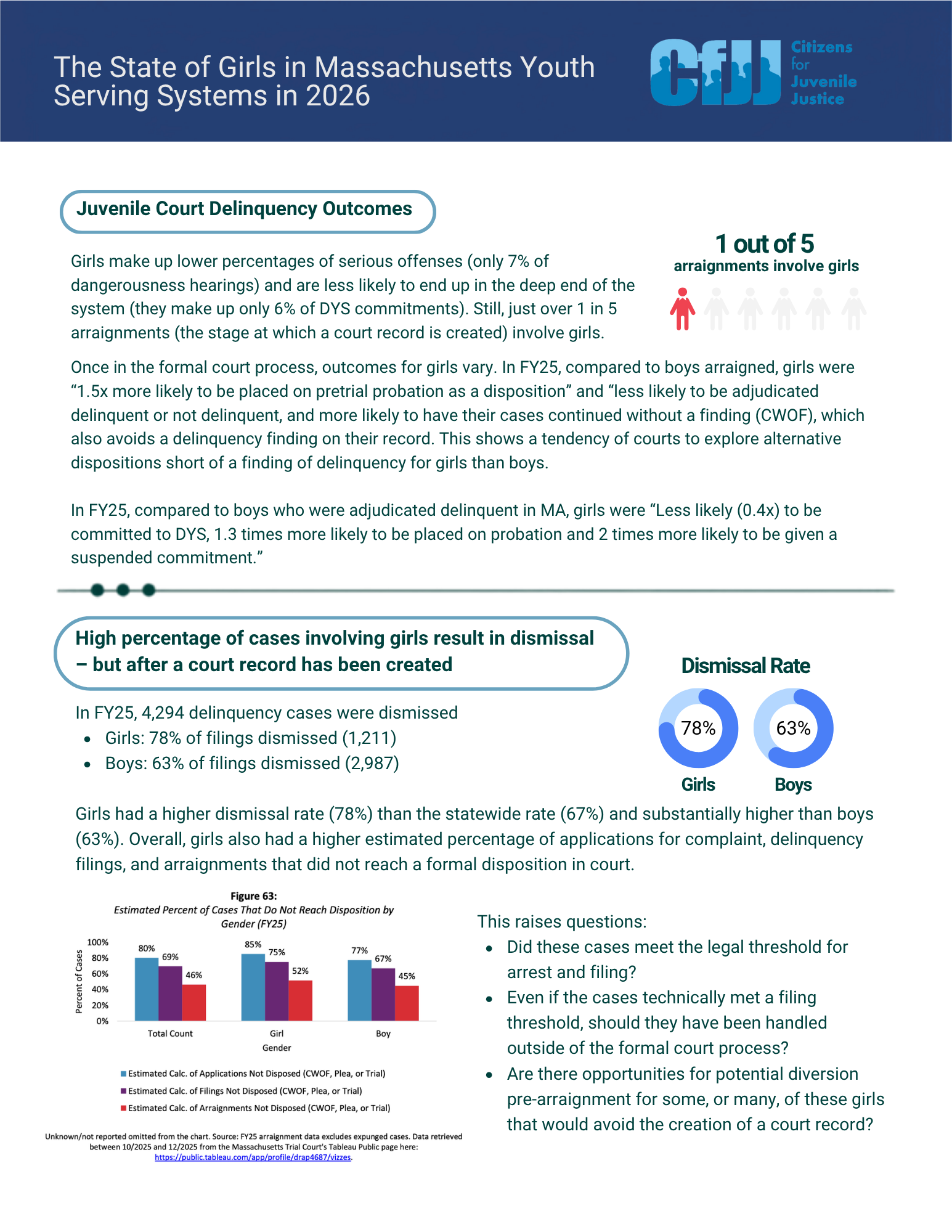
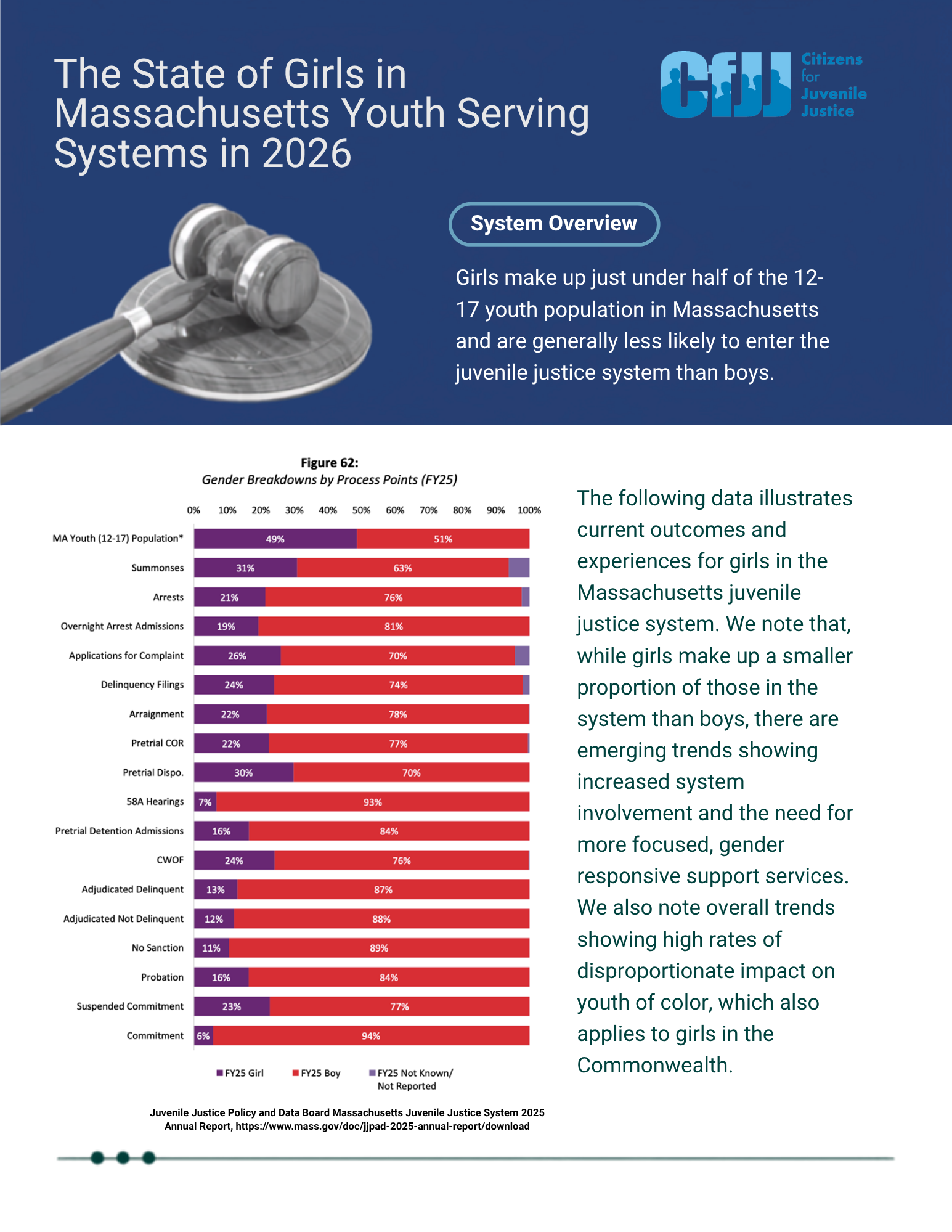
Girls make up lower percentages of serious offenses, and are less likely to end up in the deep end of the system. In Fiscal Year 2025, girls accounted for just 7% of dangerousness hearings and only 6% of commitments to the Department of Youth Services (DYS).
Yet girls still represent a significant portion of youth entering the court system. More than 1 in 5 arraignments—the stage at which a court record is created—involved girls.
Once girls enter the formal court process, their cases often follow different paths than those of boys. Compared to boys arraigned in FY25, girls were more likely to receive pretrial probation and more likely to have their cases continued without a finding (CWOF), a disposition that avoids a delinquency adjudication.
Among youth who were adjudicated delinquent, girls were substantially less likely to be committed to DYS and more likely to receive probation or a suspended commitment.
A Troubling Pattern: Cases Entering Court Only to Be Dismissed
One of the most striking findings in the FY25 data from the Juvenile Justice Policy and Data Board is the high percentage of girls' cases that are ultimately dismissed.
Of the 4,294 delinquency cases dismissed statewide in FY25, 1,211 involved girls. Overall, 78% of girls' delinquency filings were dismissed, compared to 63% of boys' filings and a statewide average dismissal rate of 67%. Girls also had higher rates of applications for complaint, delinquency filings, and arraignments that never reached a formal disposition.
These findings raise important questions:
Did these cases meet the legal threshold for arrest and filing in the first place?
Even if the cases technically met a filing threshold, should they have been handled outside of the formal court process?
Are there opportunities for potential diversion pre-arraignment for some, or many, of these girls that would avoid the creation of a court record?
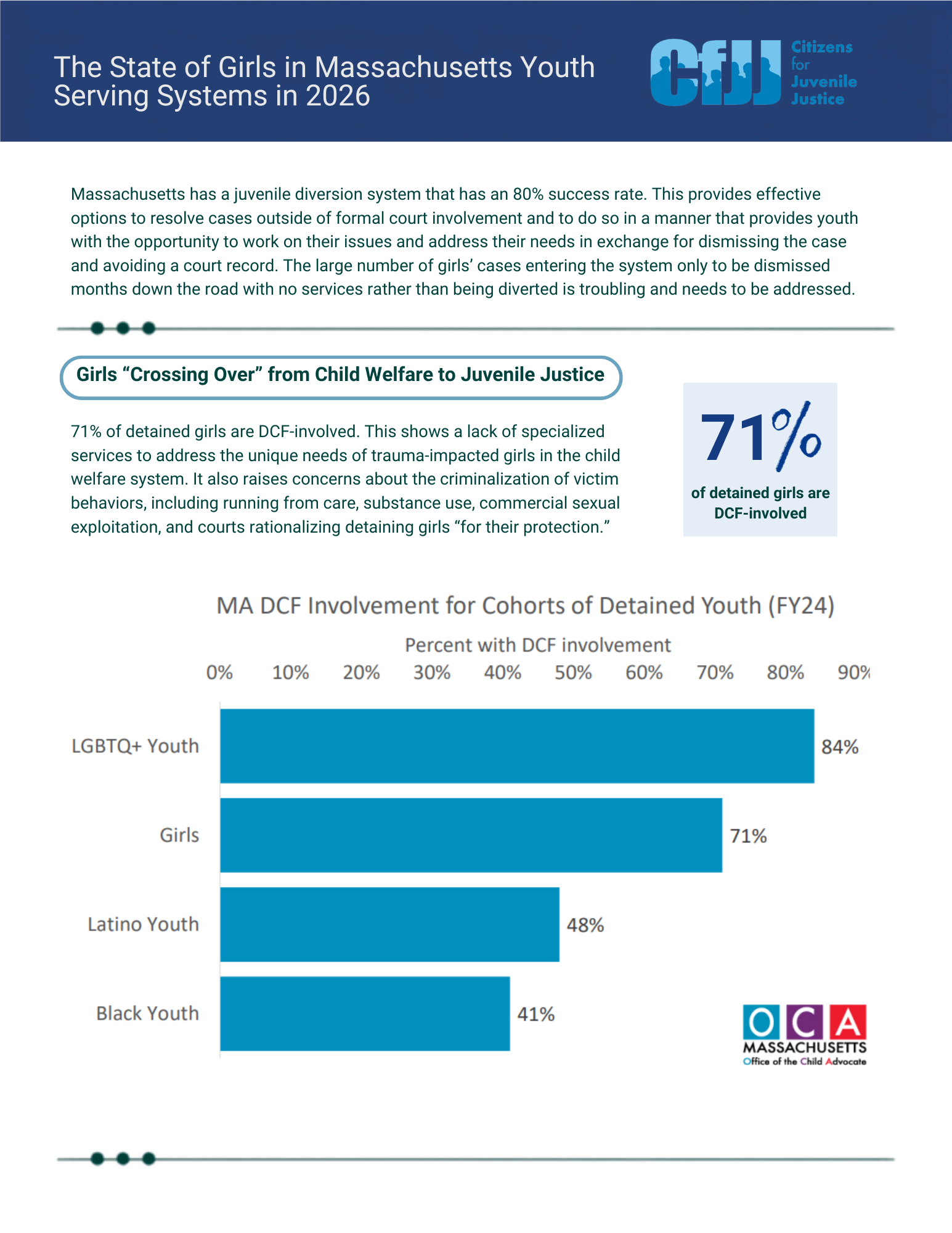
Massachusetts has a well-established juvenile diversion system with an approximately 80% success rate. Diversion allows young people to address underlying needs in exchange for dismissal of their case and avoidance of a court record. Given the large number of girls whose cases ultimately end in dismissal, there is reason to examine whether more girls could be diverted earlier, sparing them the consequences of formal court involvement while still connecting them to appropriate supports to address their needs while still holding them accountable for their behavior.
Girls “Crossing Over” from Child Welfare to Juvenile Justice
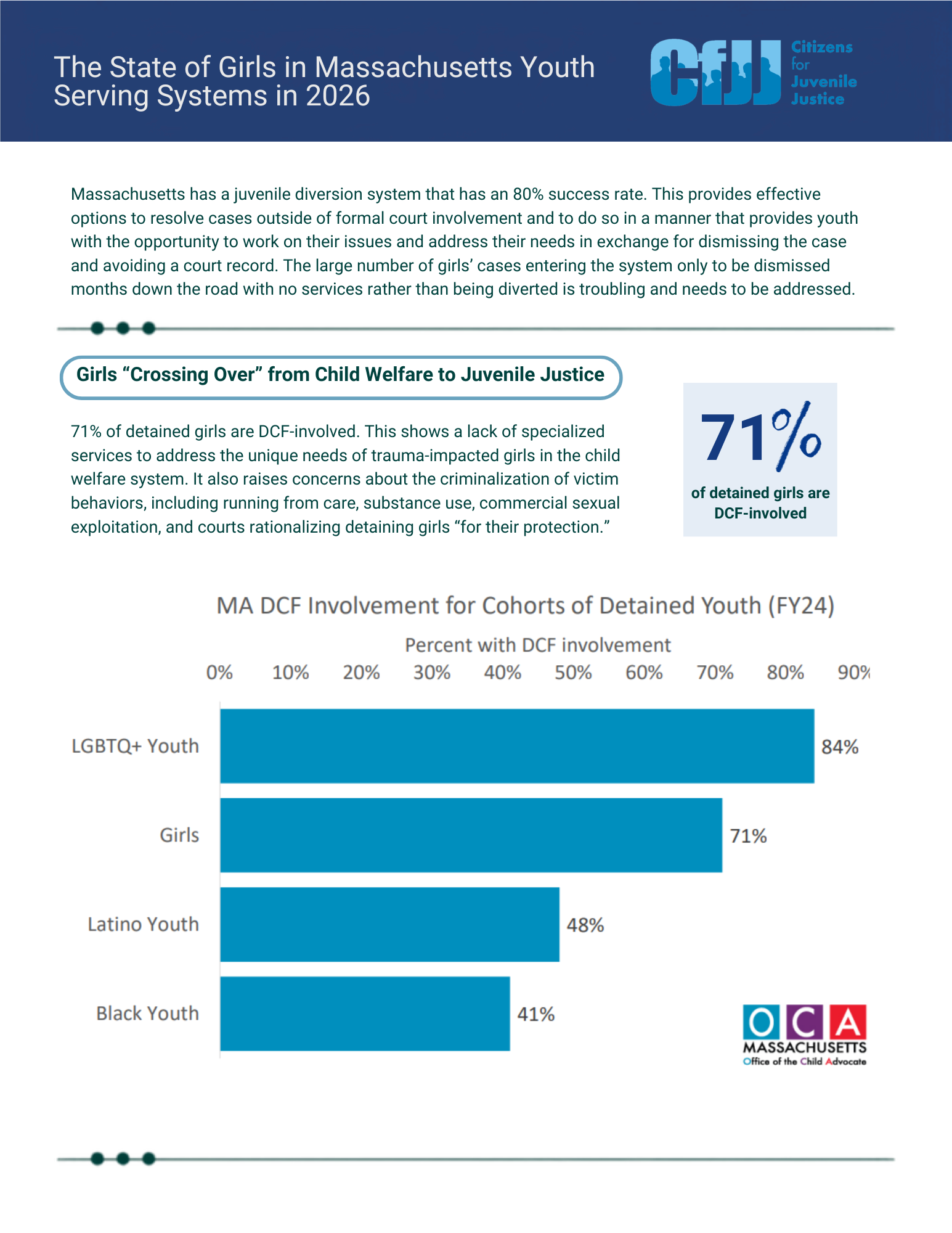
Outcomes for girls in the child welfare system are particularly concerning. Seventy-one percent of detained girls are involved with the Department of Children and Families (DCF). This statistic raises serious concerns about whether trauma-impacted girls are receiving the services and supports they need before their situations escalate into court involvement. It also raises concerns about the criminalization behaviors often associated with trauma and instability, including running from care, substance use, commercial sexual exploitation, and courts rationalizing detaining girls “for their protection.”
Public Health Concerns
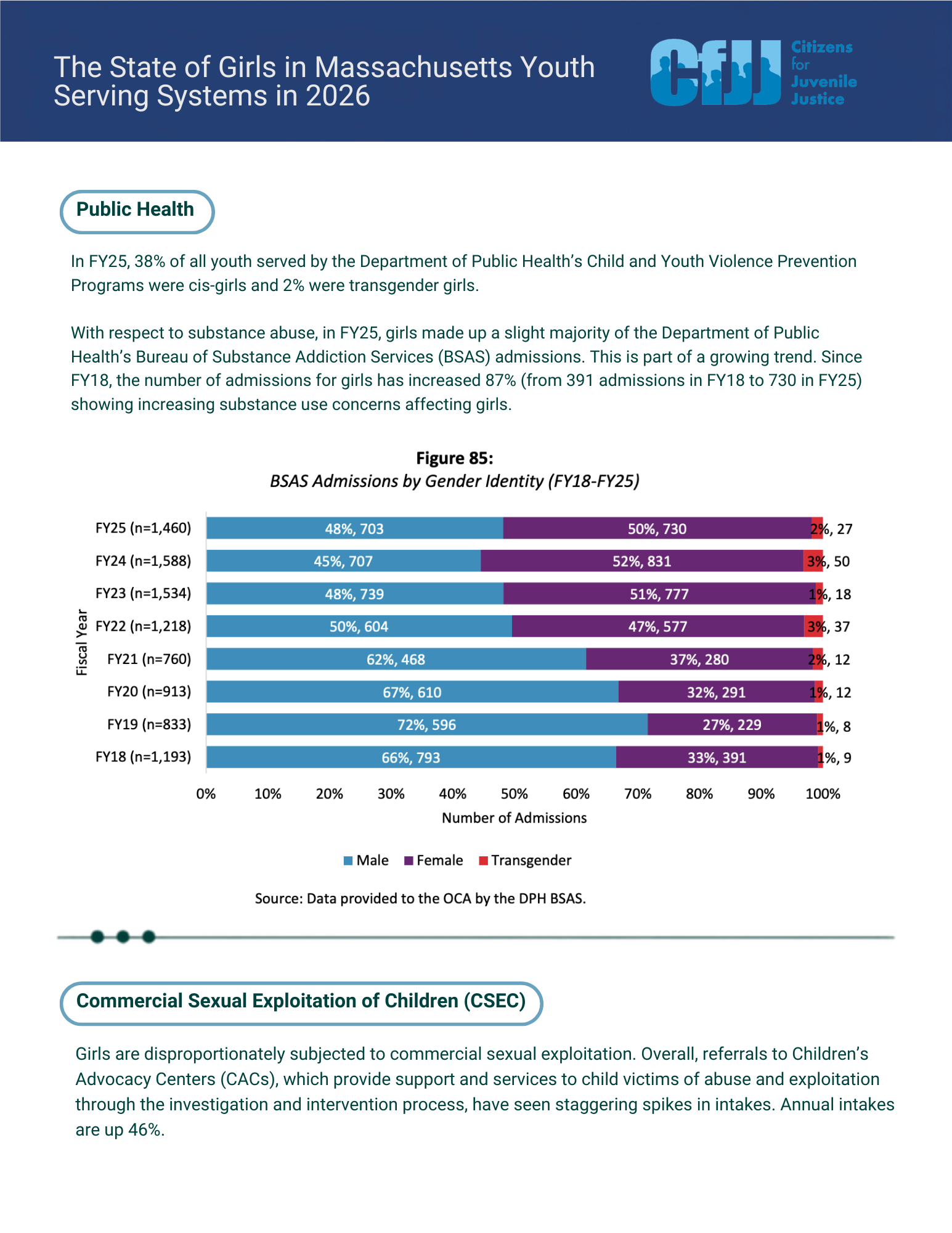
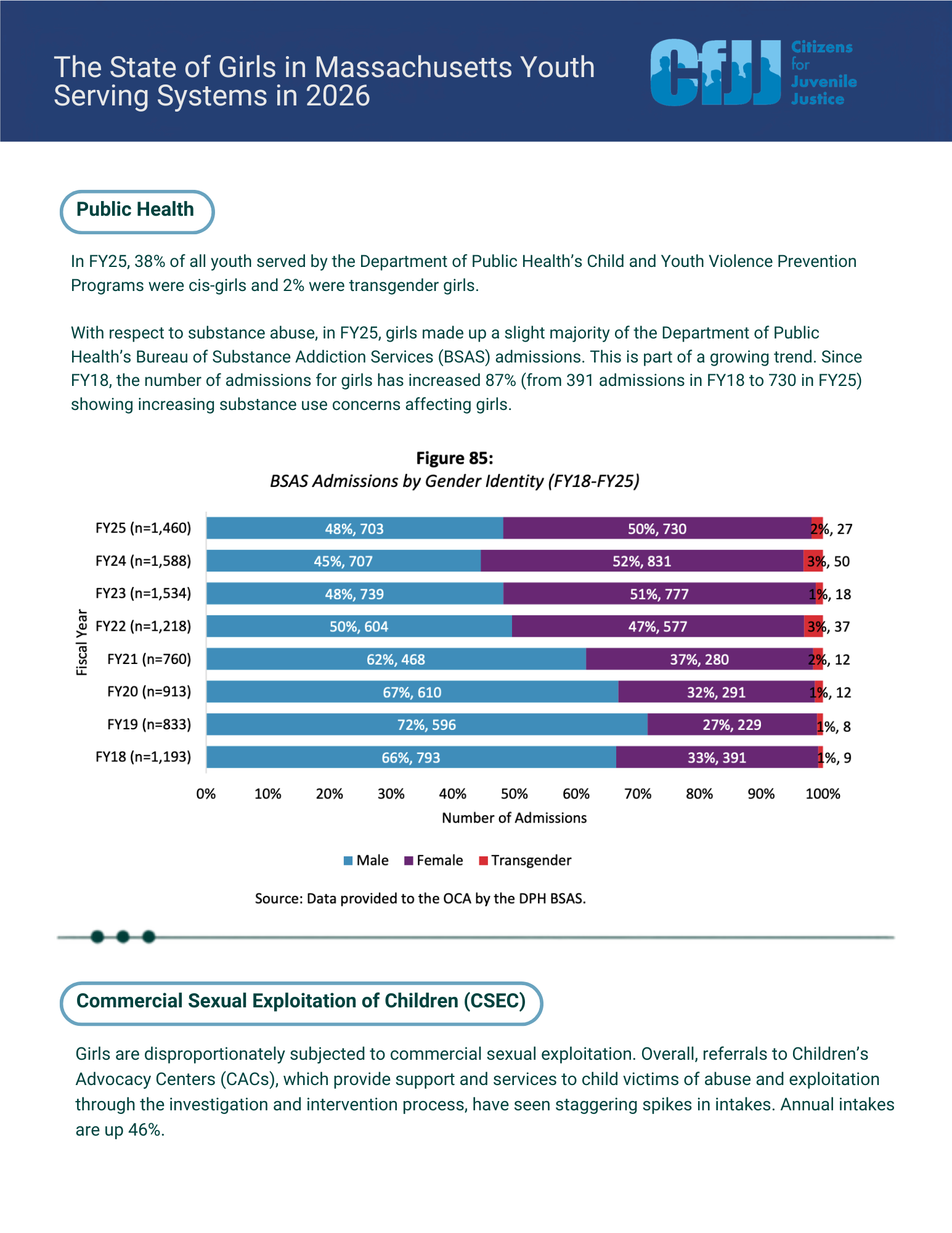
Substance use trends among girls are another area of significant concern. Girls made up a slight majority of admissions to the Department of Public Health's Bureau of Substance Addiction Services (BSAS) in FY25. Since FY18, admissions involving girls have increased by 87%, rising from 391 admissions to 730 admissions. This increase suggests growing substance use concerns among girls and underscores the need for services that are responsive to their specific experiences and needs.
Commercial Sexual Exploitation Disproportionately Impacts Girls
Girls are disproportionately subjected to commercial sexual exploitation. Children's Advocacy Centers (CACs), which provide coordinated services for child victims of abuse and exploitation, have reported a 46% increase in annual intakes. Between 75% and 80% of survivors served by the CACs identify as female.
The data also reveal stark racial disparities in these harmful outcomes. Approximately 67% of trafficked youth served by survivor-led direct-service providers identify as Black, Indigenous, Asian, Latine, or multiracial.
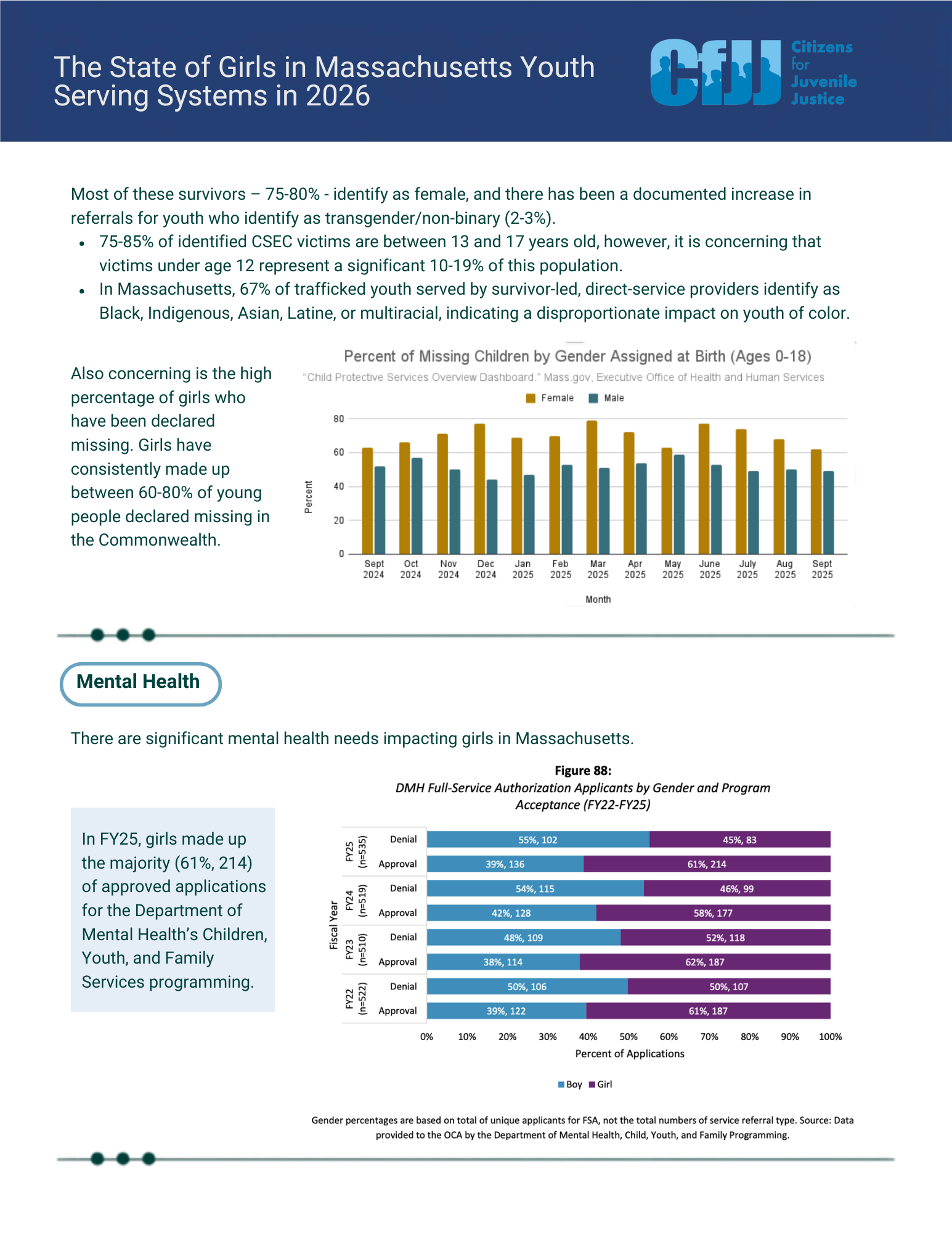
Also concerning is the high percentage of girls who have been declared missing. Girls have consistently made up between 60-80% of young people declared missing in the Commonwealth.
Mental Health Needs
Girls also account for a disproportionate share of youth seeking intensive mental health services. In FY25, girls represented 61% of approved applications for the Department of Mental Health's Children, Youth, and Family Services programs.
This finding reflects significant mental health needs among girls and reinforces the importance of ensuring access to trauma-informed, gender-responsive behavioral health services.
Sources
Juvenile Justice Policy and Data Board Massachusetts Juvenile Justice System 2025 Annual Report, https://www.mass.gov/doc/jjpad-2025-annual-report/download
Massachusetts Children’s Alliance (MACA) 2025 Annual Report, https://annualreports.machildrensalliance.org/updates-on-our-work-to-address-the-commercial-sexual-exploitation-of-children-csec/